
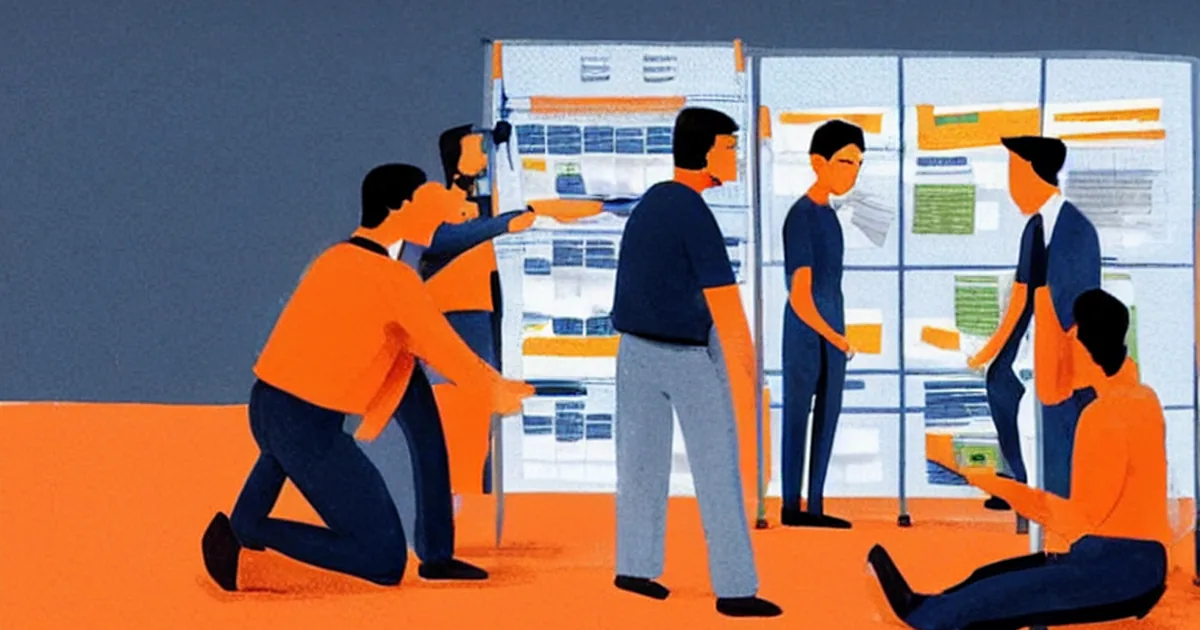
Predictive Environments: Key Concepts for Exam Success
PMBOK v8 Definition
Predictive environments are project life cycle approaches where the project scope, time, and cost are determined early in the project life cycle. In predictive approaches, the project team performs detailed planning upfront, then executes the plan sequentially through defined phases, with each phase generally completed before the next begins. These environments are characterized by low uncertainty, stable requirements, and a focus on minimizing changes throughout the project.
Why It Matters for the Exam
Predictive environments appear frequently in PMI exam questions testing your understanding of development approach selection and tailoring. You will encounter questions that require you to identify when a predictive approach is appropriate versus adaptive, and to recognize the key processes, artifacts, and management practices specific to predictive life cycles. These questions often appear in the "Development Approach and Life Cycle" domain.
Key Points to Remember (for the exam)
- Primary Characteristics: Requirements are defined upfront, scope is well-understood, and changes are minimized through formal change control processes
- Project Phases: Work is performed sequentially through defined phases (e.g., Requirements → Design → Build → Test → Deploy), with phase gates or stage gates between each phase
- Planning Approach: Detailed planning occurs early in the project; the project management plan is created before execution begins
- Risk Profile: Low uncertainty and risk because the work is familiar and requirements are stable
- Key Artifacts: Project charter, project management plan, requirements documentation, work breakdown structure (WBS), schedule, and budget are created early and updated through formal change control
- Best Suited For: Projects with clear, stable requirements; well-understood technology; and where the customer wants minimal changes after planning
- Common Confusion: Predictive is NOT the same as "waterfall" in the traditional sense—predictive approaches can have iterative feedback within phases, but the overall life cycle is sequential
Typical PMI Exam Example
A construction company is building a bridge for a government client. The requirements are fully defined in the contract, the technology is well-established, and any changes will require formal approval through a change control board. Which development approach is most appropriate for this project?
Answer: Predictive approach, because requirements are stable, the work is familiar, and changes must be formally controlled.
PMI Exam Traps
- Trap: Confusing predictive environments with "no changes allowed"
- Reality: Predictive environments use formal change control processes—changes are managed, not prohibited
- Trap: Thinking predictive means no feedback loops
- Reality: Predictive approaches can include reviews and inspections within phases, but the overall sequence is linear
- Trap: Assuming predictive is always better for large projects
- Reality: Large projects with high uncertainty may benefit from adaptive or hybrid approaches instead
- Trap: Confusing predictive life cycle with "project life cycle" in general
- Reality: Predictive is one type of development approach; project life cycle includes all phases from start to completion regardless of approach
Important PMI Connections
| Related Concept | Relationship Type | Exam Attention Point |
|---|---|---|
| Adaptive Approaches | Opposes | Predictive = upfront planning; Adaptive = iterative/incremental delivery |
| Tailoring Considerations | Influences | Tailoring determines when predictive is appropriate vs. adaptive |
| Project Phases | Component of | Predictive environments use sequential phases with phase gates |
| Change Control Process | Key practice | Predictive relies on formal change control; adaptive embraces change |
| Risk Performance Domain | Influenced by | Predictive reduces uncertainty through detailed early planning |
Quick Review Questions
- In a predictive environment, when is most of the project planning completed?
- What type of projects is the predictive approach best suited for?
- How does a predictive environment handle changes to requirements?
- What is the relationship between predictive approaches and project phases?
- When would you choose a predictive approach over an adaptive approach?
PMBOK v8 Reference
Section 4.2.1 - Predictive Approaches Section 2.1.4 - Additional Considerations for Predictive Environments Section 2.1.5 - Key Concepts